Hello everyone, in the next couple of weeks I’m going to create some new posts on this blog, but in the meantime, you can follow me on Instagram by clicking the link below. https://www.instagram.com/criminalunderworldcompilation/
If you want to support us in any way you can do so by purchasing yourself or your loved ones a t-shirt or whatever your heart desires from our website. Click on the link below to get access to our website.
Donald “Dice” Dawson (1921-2012) was one of the top bookmakers and most-connected mob associates in the United States.
Early Life
Dawson was born on May 04, 1921, in Detroit. Dawson was the son of a wealthy and respected Detroit Chevrolet car dealer. When young Dawson was thirteen, he was the water boy for the Detroit Lions, then owned by gambler Dick Richards. Dawson began gambling at an early age and in high school earned his nickname, Dice, because of his crap-shooting abilities. He attended Holy Cross, through which he became acquainted with other alumni, including attorney Edward Bennett Williams who would later become president of the Washington Redskins. Dawson also was in the Marine Corps and served in the South Pacific during World War II. Upon his release from military service, Dawson went to work for his father, selling Chevrolets.
Trouble With The Law
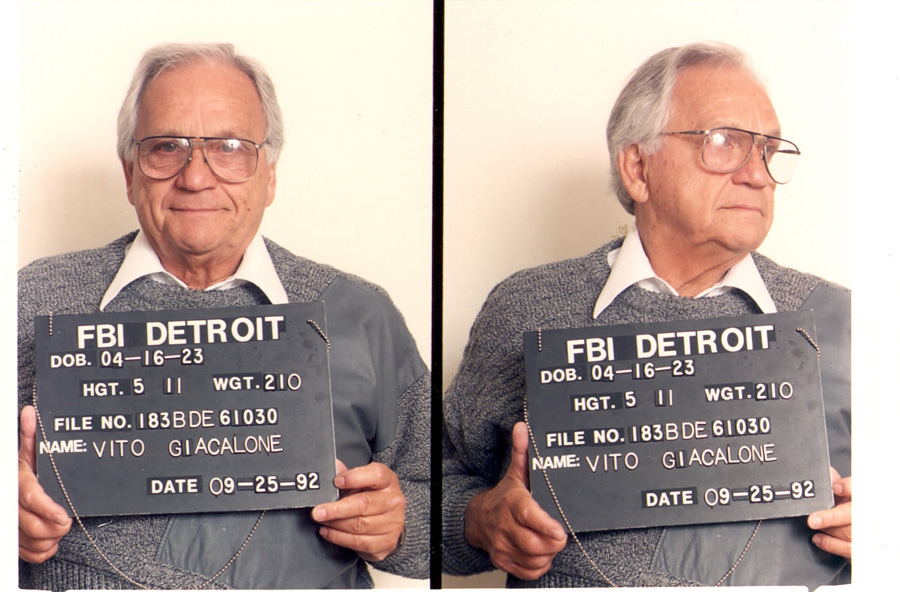
By the late 1950s, law enforcement tabbed Dawson one of Metro Detroit’s top bookies and a high-level Mafia associate. FBI and Michigan State Police reports from the 1950s and ’60s show that informants were telling authorities of Dawson’s frequent time spent at the Fox and Hounds, described as his headquarters, cavorting with notorious local mobsters such as the brothers Giacalone (Anthony and Vito) and Corrado (Dominic and Anthony), along with some of the city’s most popular professional athletes, such as Lions’ All-Pros Alex Karras and Bobby Layne.
Later Life and death
Dawson is one of the names underworld figures that the NFL cited Karras was linked to when suspending him due to his gambling and unsavory social companions for the entire 1963 season. His name was tied to other NFL stars, according to FBI documents from the era, including the Kansas City Chiefs quarterback Len Dawson (unrelated). When he was arrested, the FBI hailed the bust as taking down “one of the biggest and most influential bookies in the country” In an interview with author Dan Moldea for Moldea’s book “Interference — How Organized Crime Influences Pro Football” — published in 1989 — Dawson admitted to coordinating point-shaving schemes in more than 30 NFL games, asserting that Layne, a Lions’ all-time great under center at quarterback, was one of the players he used to manipulate outcomes. Layne denied the accusations before he died in 1986. Dawson died on May 10, 2012, and is laid to rest at the Southern Nevada Veterans Memorial Cemetery located in Boulder City, Clark County, Nevada.
Donald “Dice” DawsonAnthony GiacaloneVito Giacalone
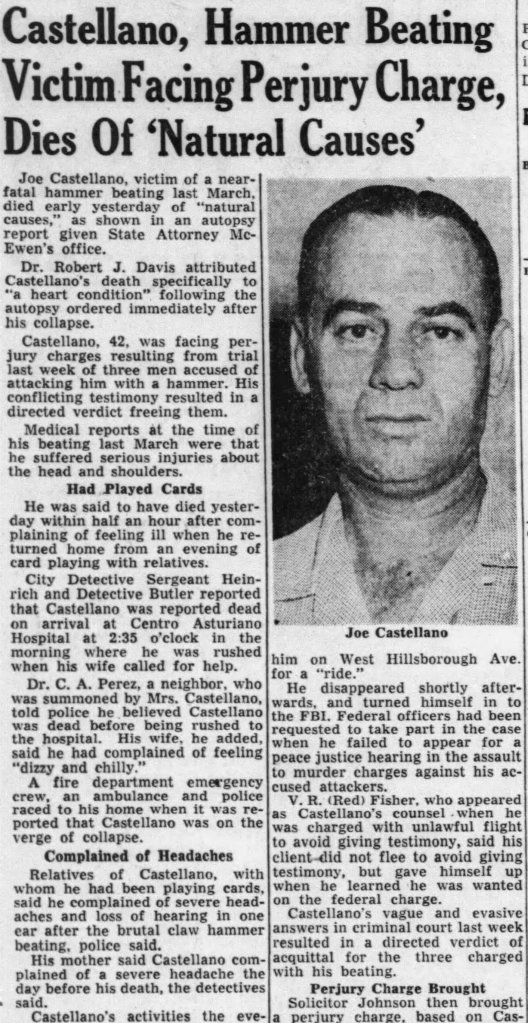
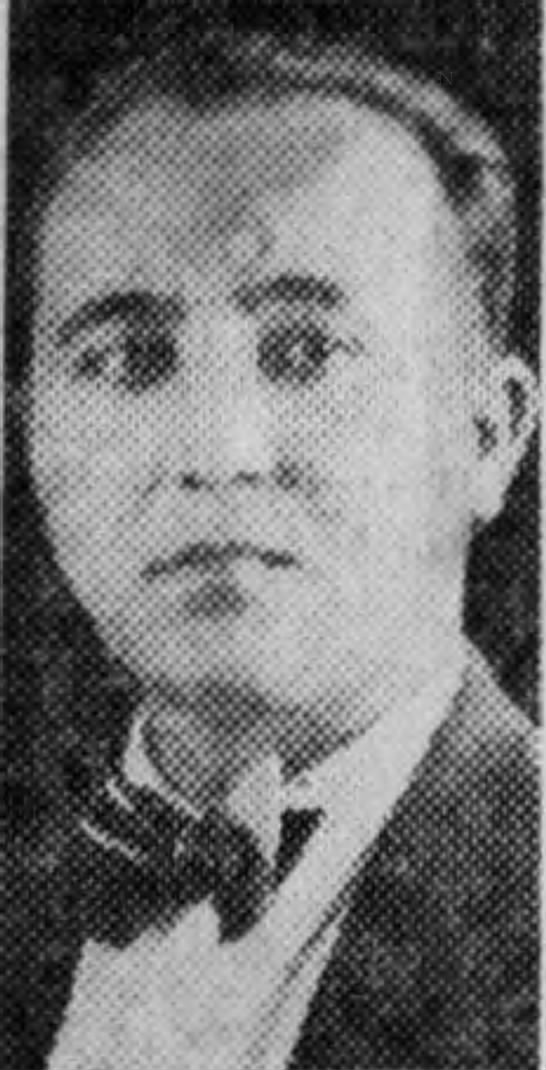
Joe Castellano had a lot of friends in the Tampa area. He was a popular produce dealer. But Joe also had friends in the Tampa underworld. One night he went for a nice quiet ride into the country with three of them. He barely made it back.
At midnight, March 19, 1953, Castellano met with Joe Mistretta, Salvatore Scaglione, and Angelo LoScalzo at the Italian Club, a center of social activities for the Italian community in Ybor City. The three men told Castellano that they had come into a load of whiskey and wanted to discuss a distribution deal. Castellano saw a great opportunity to make a few extra dollars. Besides these guys were friends of his, and would surely give him a good deal.
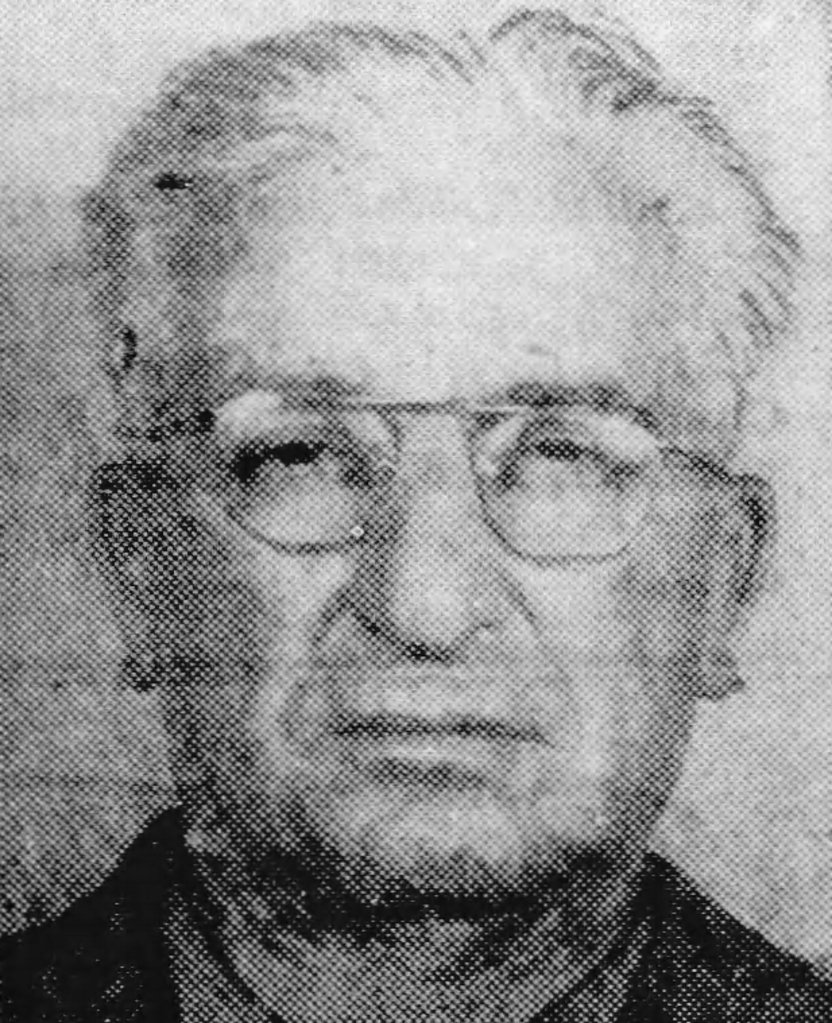
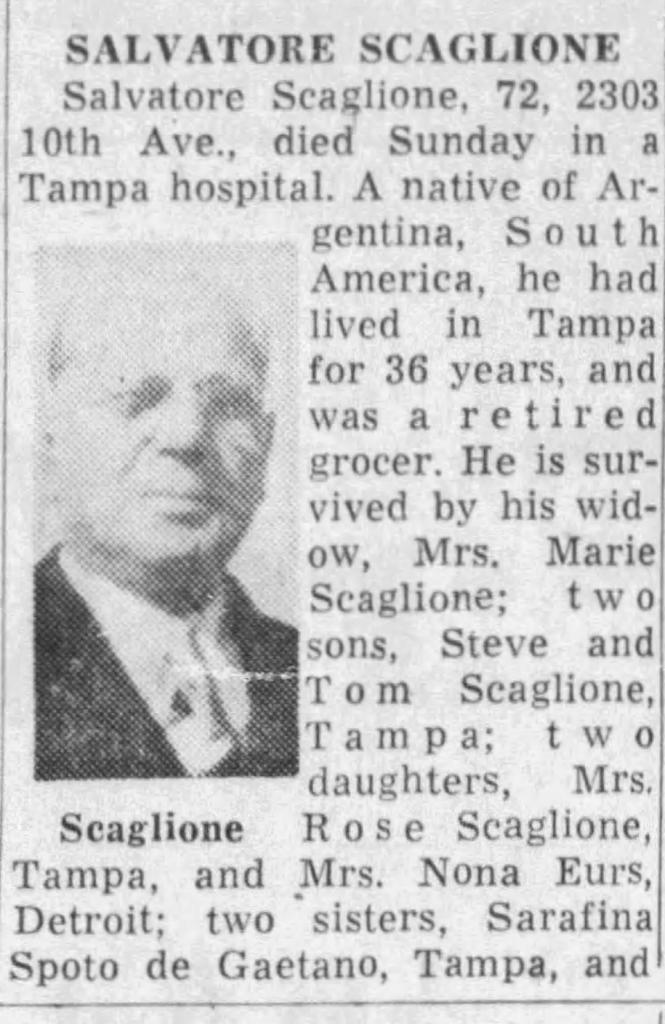
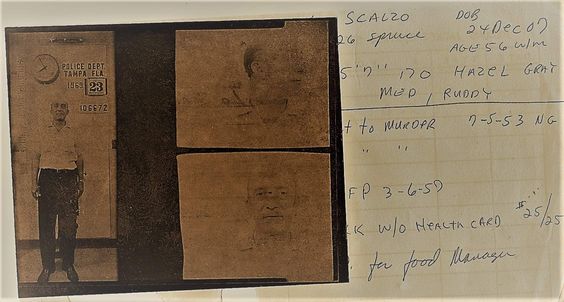
Joe Mistretta, then 58, was a bodyguard at the time for Augustine “Primo” Lazzara, a major force in the mob’s bolita rackets. Salvatore Scalgione, 61, was a grocer who had been active in the Tampa family for years. He had a son, Stefano, who was also a made member of the Tampa family. Angelo LoScalzo, 45, was a recent immigrant from Sicily, who spoke poor English. He was also the father of future Tampa boss, Vincent LoScalzo
The four men piled into a car and drove out of the Tampa city limits into the rural countryside of Hillsborough County. The car pulled off the road at West Hillsborough Ave. near Sweetwater Creek. Castellano then found himself under attack. The three men wielded claw hammers and began pounding Castellano’s head in. He fought back, managing to grab one of the hammers and swung it wildly. He broke away, but not before receiving two broken arms, and eight, deep scalp gashes.
Castellano stumbled to the nearest house, where the owner, who never game his name under fear of reprisal began driving Castellano back into Tampa to a hospital. Before reaching medical services, Castellano insisted to be brought to the home of Constable Clarence Prevatt. Prevatt came out to the car and talked with Castellano for a few minutes before continuing to Tampa Hospital. Castellano named his three attackers, but he couldn’t believe they would harm him. He kept saying, “They are my friends.” On the evening of March 21, shortly after 8 pm, Joe Mistretta, Sal Scaglione, and Angelo LoScalzo walked into the sheriff’s office, with their lawyers, to surrender. Although as an exchange for their surrender they were promised no mug shots would be taken, the men found themselves having pictures taken anyway, which were prominently featured in the next day’s newspaper. Each man was released under $2500 bond. The three men were charged with assault to murder, but by the time the case wound its way through the courts, none of the men received any more than a slap on the wrist.
Joe Mistretta and Salvatore Scaglione would be named in 1963 as elders in the Trafficante organization. Angelo LoScalzo would remain on the periphery of the Tampa mob for years to come, being named in both 1963 and 1978 as a made member., although he did die in 1977. Joe Castellano kept a low profile, faded from the underworld scene, and never found himself in this situation again.
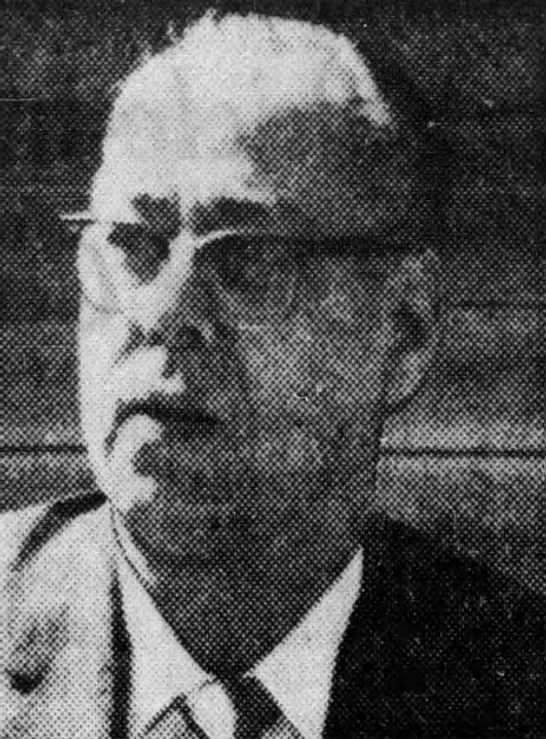
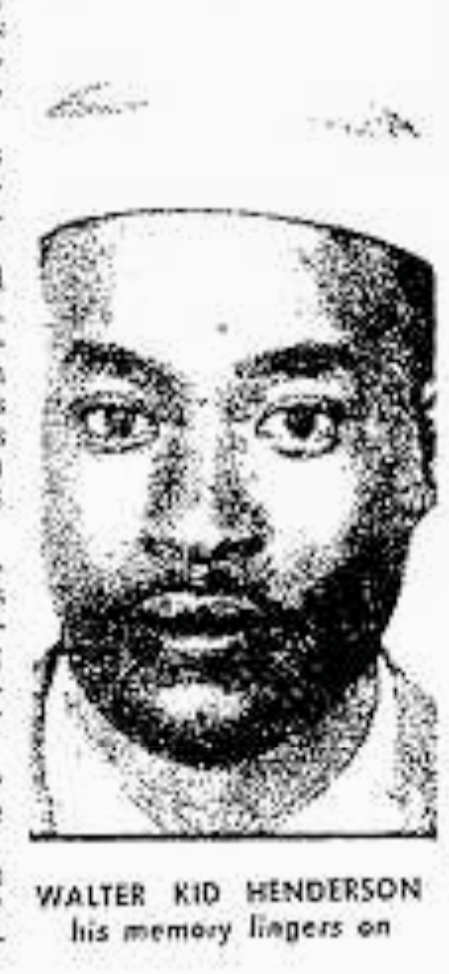
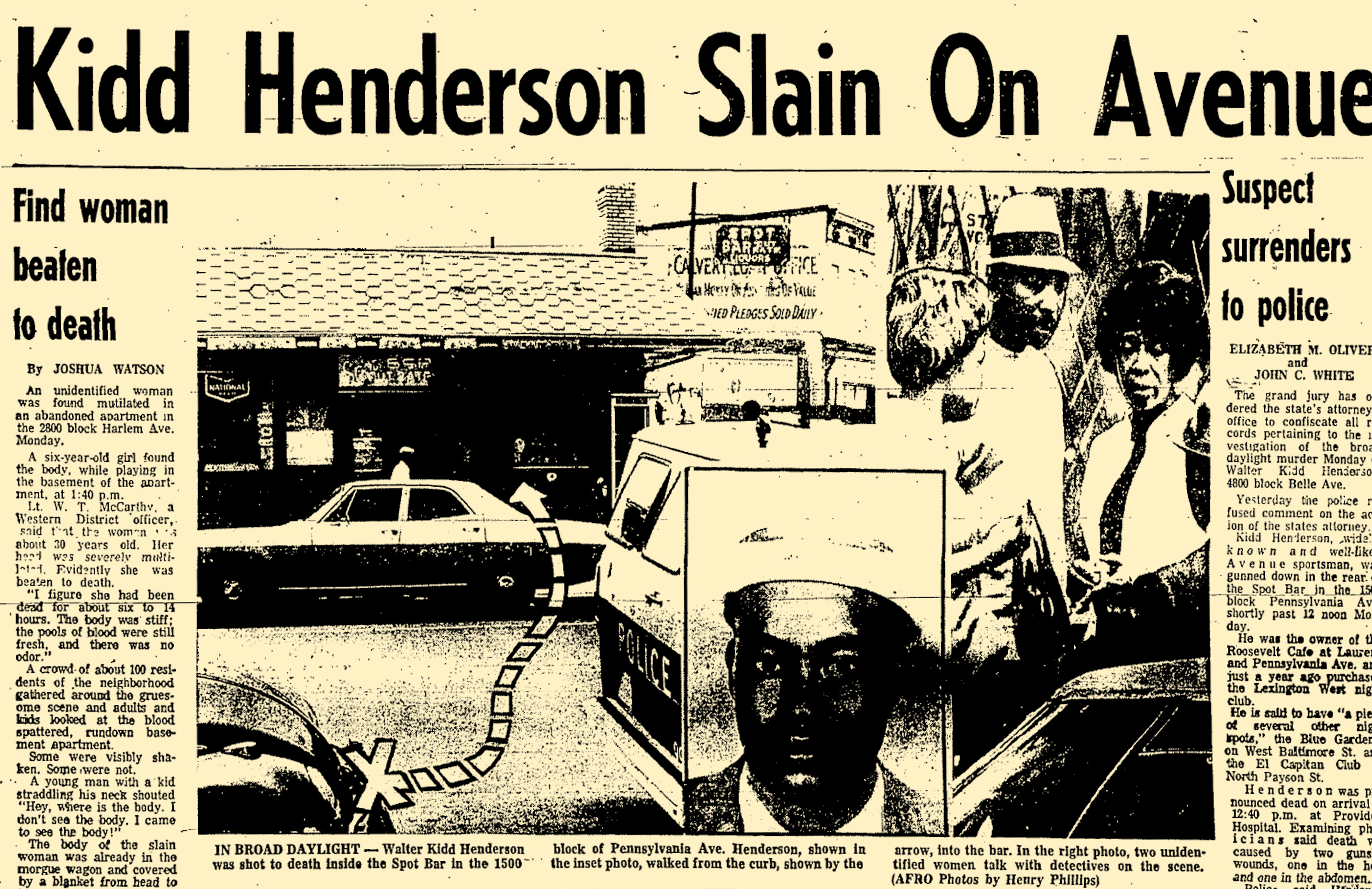
Walter (Kidd) Henderson aka “Walter Kidd” or “The King” (1926-1969) was a colorful sportsman who operated in Baltimore City. Walter was born on August 25, 1926, in North Carolina.
According to newspaper articles, it stated that Walter may have been involved in the drug trade. He was known to be a “fixer” on the Avenue (Pennsylvania Ave) and was associated with many Baltimore colorful street figures such as Melvin “Little Melvin” Williams.
He was also close friends with the older brother of US Army master sergeant and convicted drug trafficker Leslie “Ike” Atkinson. It was believed that Walter was the one who told “Ike” about drug trafficker Frank Matthews.
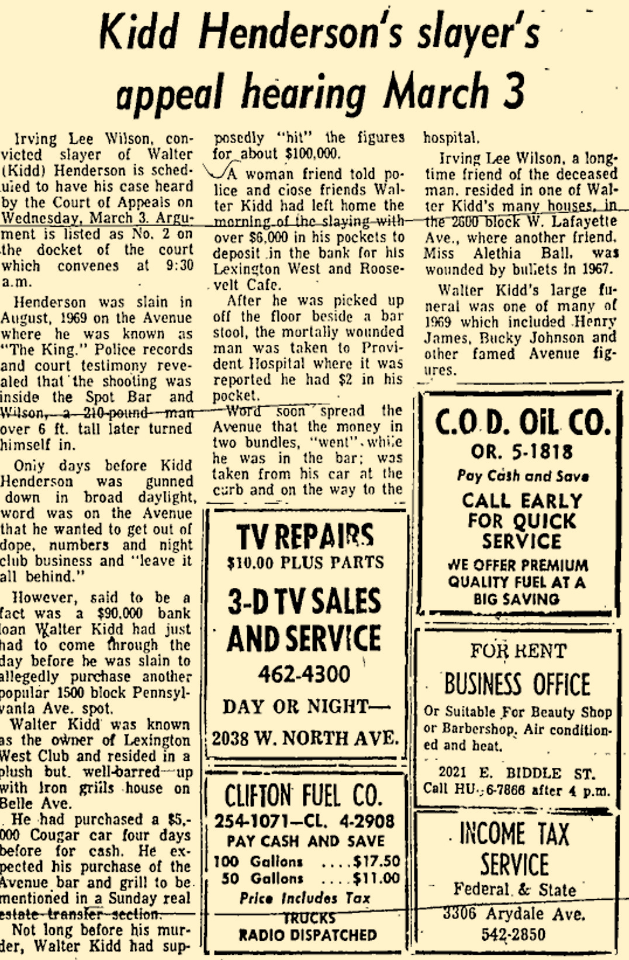
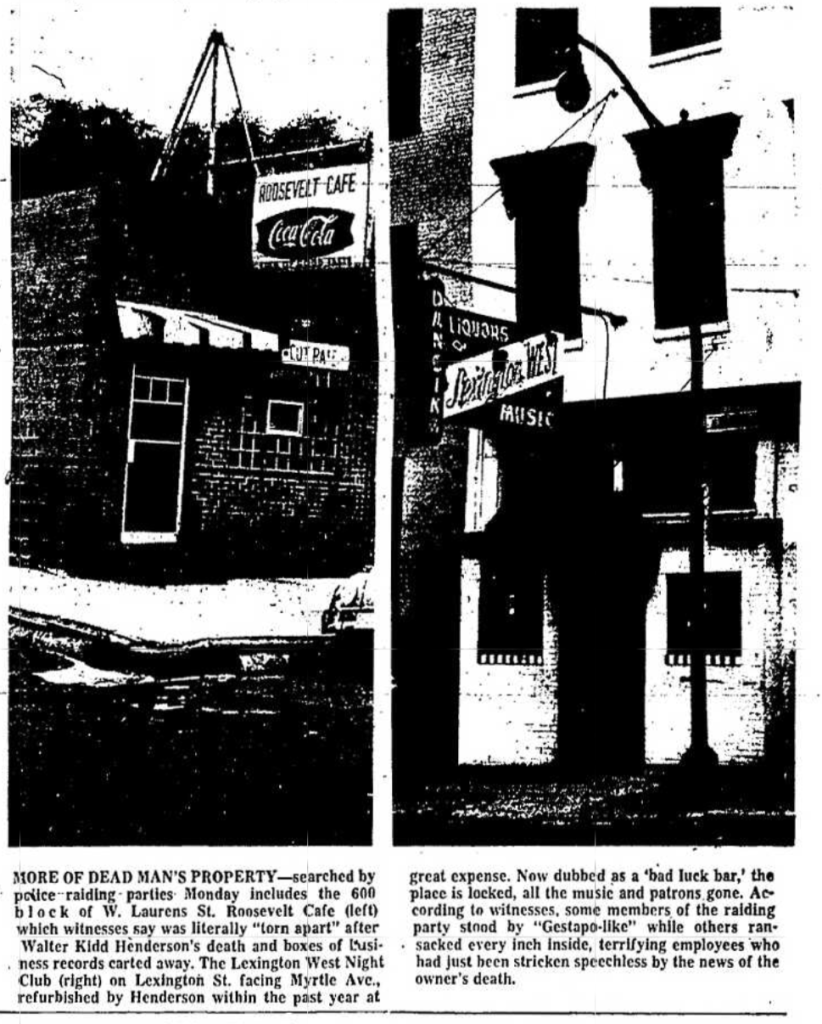
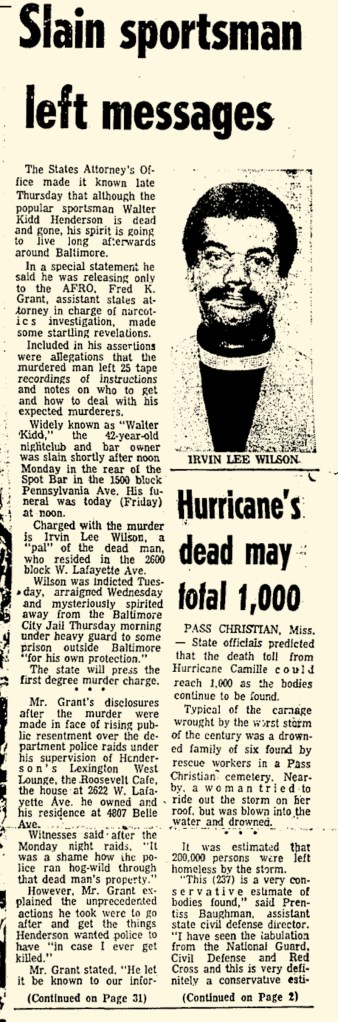
Walter was the owner of two bars in Baltimore City. In August 1969 Walter was shot to death in the rear of a sports bar on 1500 block Pennsylvania Ave. Irvin Lee Wilson who was friends with Walter turns himself in and was charged with the murder of “Walter Kidd”. The reason behind his death is still a mystery.
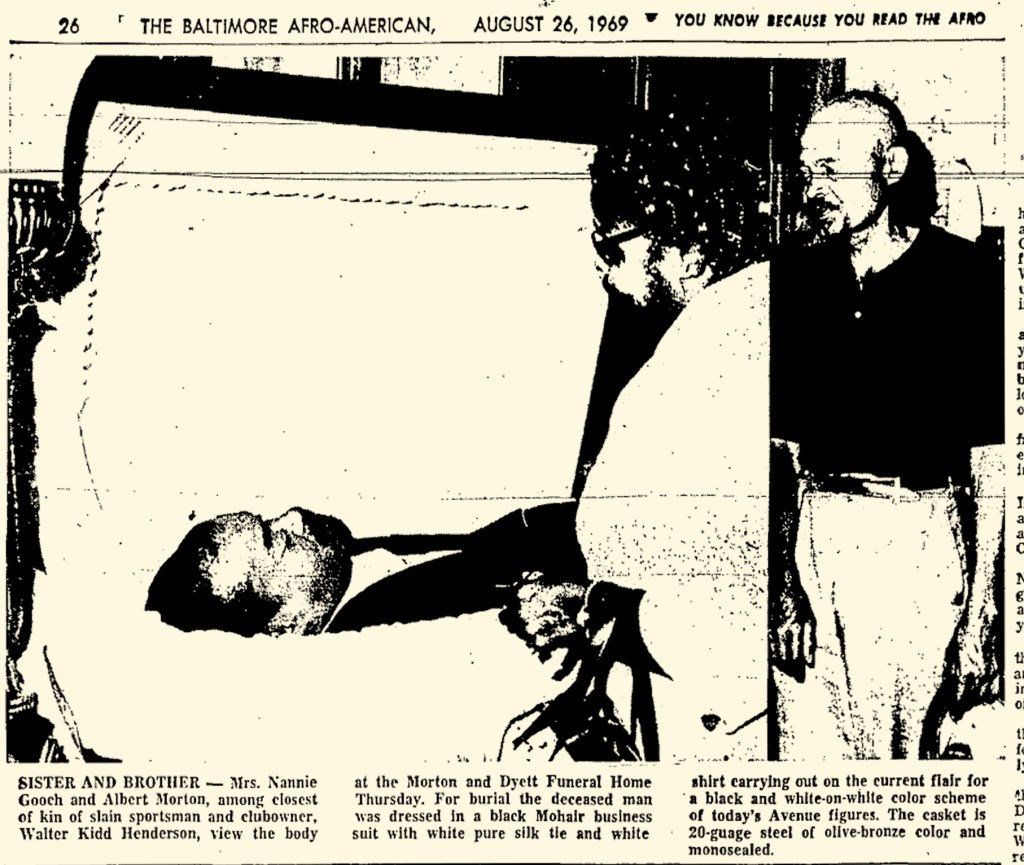
Walter was laid to rest at the Pleasant Grove Baptist Church Cemetery in North Carolina. Walter will be remembered as a flamboyant figure who was known to fancied leather coats of many colors some of them fur-trimmed.
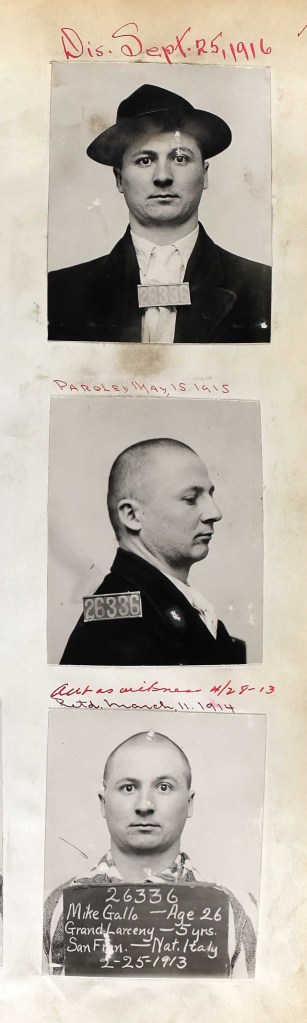
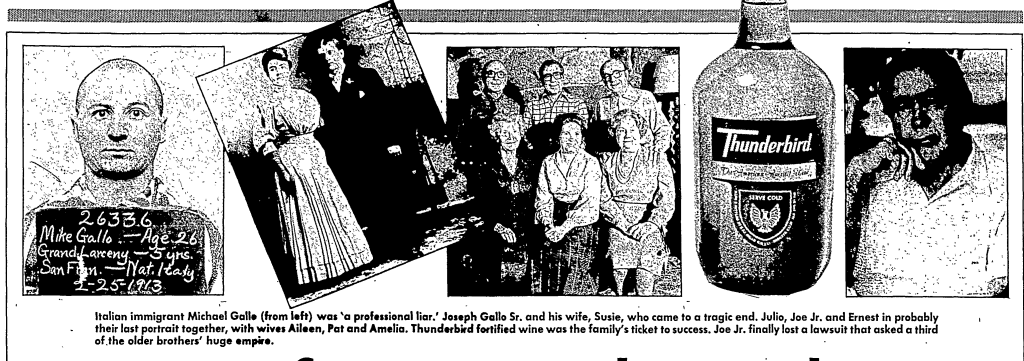
Michael J. “Mike” Gallo (1886-1977) was allegedly believe to be the head of the Camorra in San Francisco. Michael (born Michelo) was born on May 18, 1886 in Cuneo, Italy. According to newspaper articles it states that both Michael and his brother Giuseppe “Joseph” Gallo decide to immigrate to America to get out from under the thumb of their stern father. They both fetched up to Oakland.
Michael , a born scam artist, became a flashy operator across the bay on the barbary coast, the kind of hood who favored big cars, pinkie rings, and flashy women. A bootlegger during prohibition, he did lots of time behind bars, including one five year hitch in San Quentin.
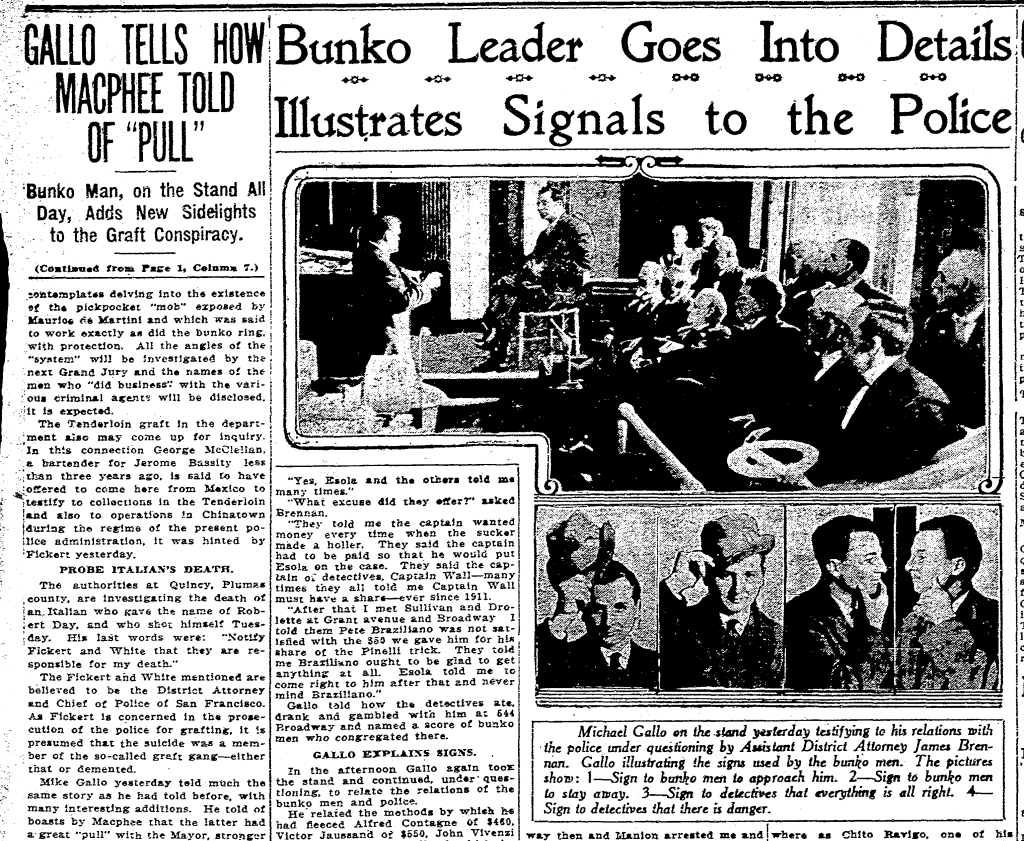
According to newspaper articles it stated that Mike was a member of a pickpocket / Italian bunco ring that operated in San Jose, San Francisco, and Los Angeles, but that there headquarters were in San Francisco.
Mike was involved in a big bunco scandal during his trail in 1913 when he confess that he made payments to several policemen where Mike would directly or indirectly paid money for “protection” to assure the operation of the bunko men unhampered by police activity.
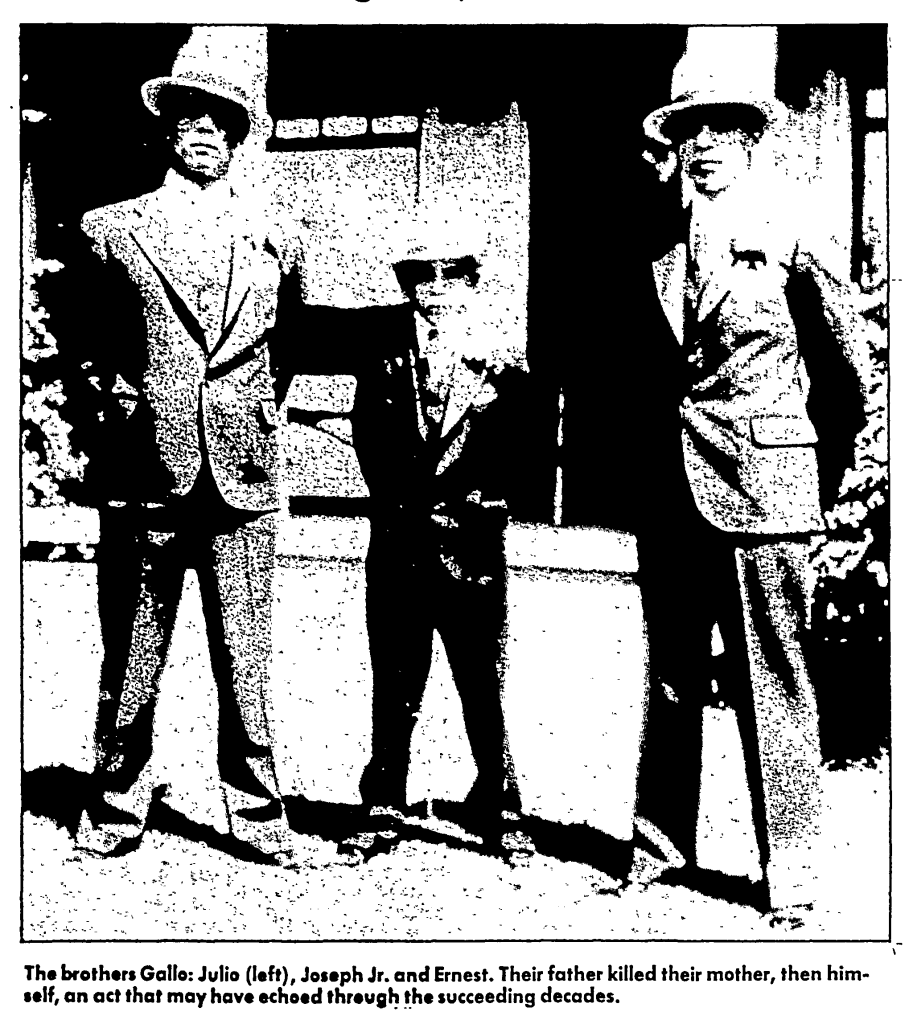
Mike and his brother Joseph Gallo (1882-1933), who married two sisters named Bianco started the Gallo Wine Co. in 1906. In 1933 Mike brother Joseph died who had begin mumbling to himself and showing other signs of mental illness killed his wife (Assunta “Susie” Bianco) and then killed himself. This such of behavior seemed to run in the family. Michael also tried to kill his wife (Tersilla Bianco), stabbing her repeatedly in the back as she ran for her life. He did more time in jail for that.
Mike had three nephews; Ernest and Julio Gallo who started E. & J. Gallo Winery, which today is the largest exporter of California wines. A third brother, Joseph, was a rancher, cheese maker, and founder of Joseph Gallo Farms which produces dairy products including a variety of cheeses and is one of the largest family-owned dairy operations in the world.
Michael died on November, 1977 in Las Vegas, Nevada and is laid to rest at the Bunkers Memory Gardens Cemetery in Las Vegas, Clark County, Nevada
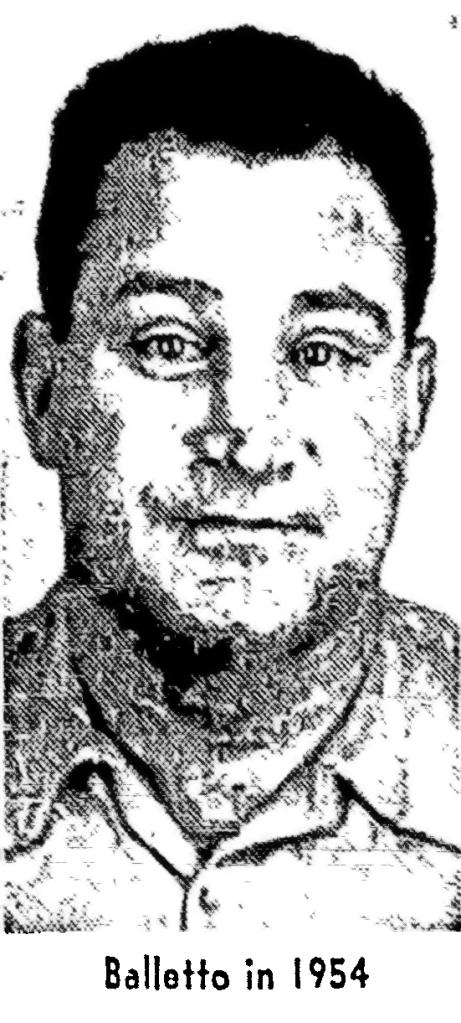
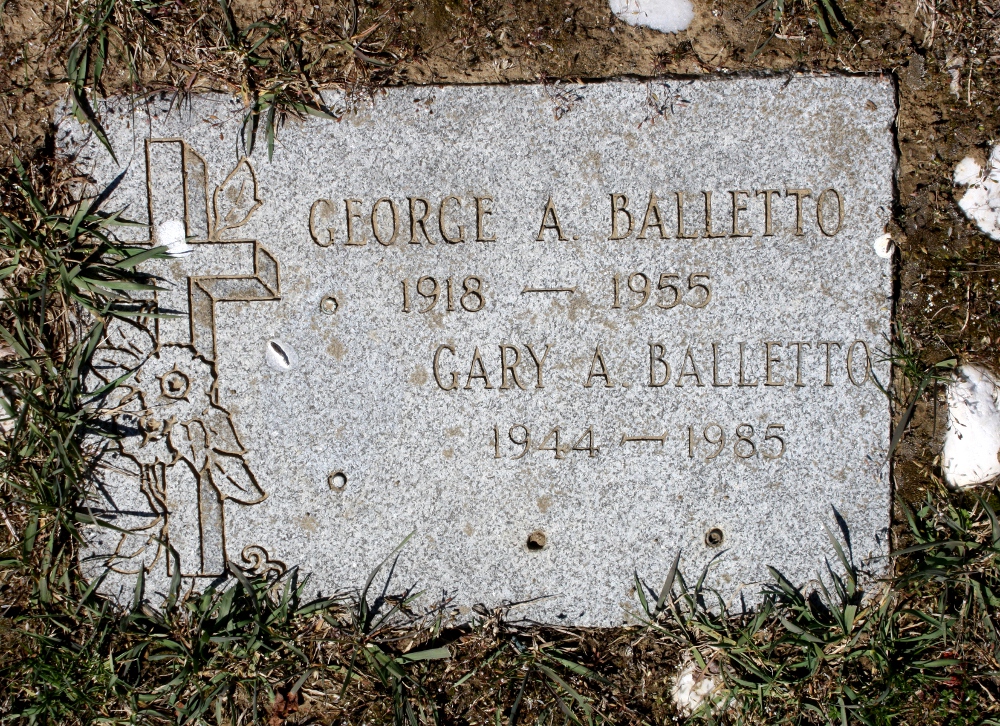
George “Tiger” Balletto (1918-1955) was an alleged associate of the New England crime family. George was born on March 28, 1918, in Providence, Rhode Island to parents Dominic Balletto and Angelina Ferrara. According to online sources it stated that George was an ambulance driver according to his obituary and a known “assault artist” to police. Balletto was murdered in the early morning of Aug 10, 1955, at a bar called Bella Napoli Cafe. The assassin of George “Tiger” Balletto was a man by the name of John “Jackie” Nazarian who allegedly was one of the most vicious and feared gunmen on the east coast. George is the grandfather of lightweight world champion boxer Gary “Tiger” Balletto. George is laid to rest at the Saint Ann Cemetery, Cranston, Providence County, Rhode Island.
George “Tiger” BallettoHeadstone of George “Tiger” Balletto
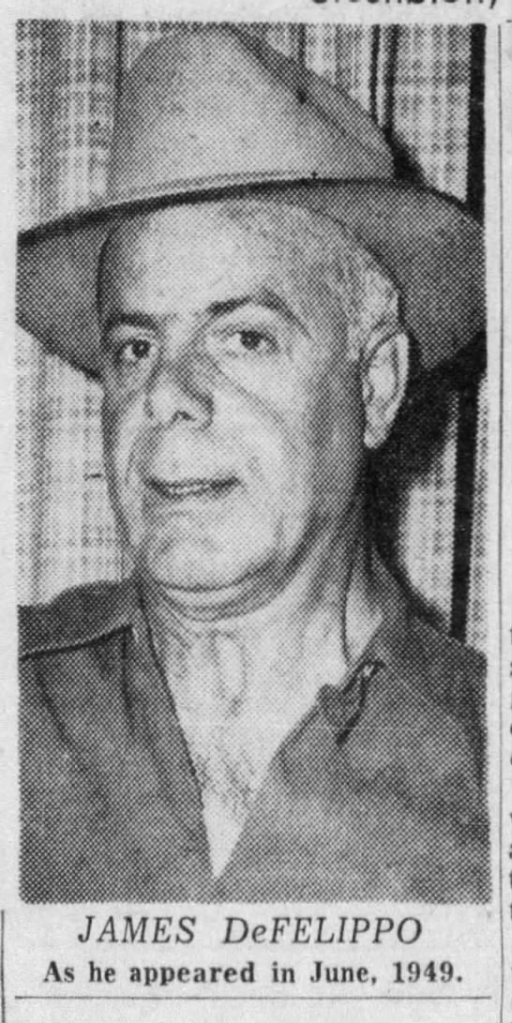
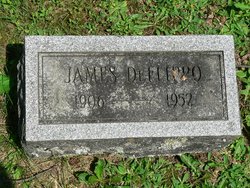
James “Jimmy Flip” DeFilippo (1906-1952) was a small-time Sicilian gambler/hoodlum who operates in the “Triple Cities” Binghamton, NY Endicott, NY and Johnson City, NY.
James was born in 1906 in Pennsylvania.
According to newspaper articles it says that James was known at various times as a professional gambler, hard-working construction laborer, a barroom brawler and a politician. James had a criminal record that goes back more than 20 years. James was first arrested in 1928 for attempted burglary at Charles Benedetto’s soft drink establishment. He pleaded guilty to the crime and was place on probation. In 1929 James was arrested for violation of probation and was sentenced to serve 4 years in Auburn Prison. On April 05, 1941 james was arrested for assaulting the then mayor of Binghamton, Charles W. Kress whom DeFilippo served politically. For that slugging, James was sent to jail for a year.
In 1948 James was questioned by sheriff’s men and Binghamton police as a suspect in the death of Binghamton gambler Martin “Marty” Agricola. Agricola body was found in a creek bed off the Powderhouse Road. According to newspaper articles it says that Agricola had been complaining that some gamblers were permitted to operate in Binghamton and that he wasn’t. He also had threatened to cause that gambling establishments to be closed.
DeFilippo was known to have aggravated members of the gambling fraternity many of whom referred to him as “big mouth” or “stool pigeon.” He was distrusted by some gamblers as a men who carried stories to the police.
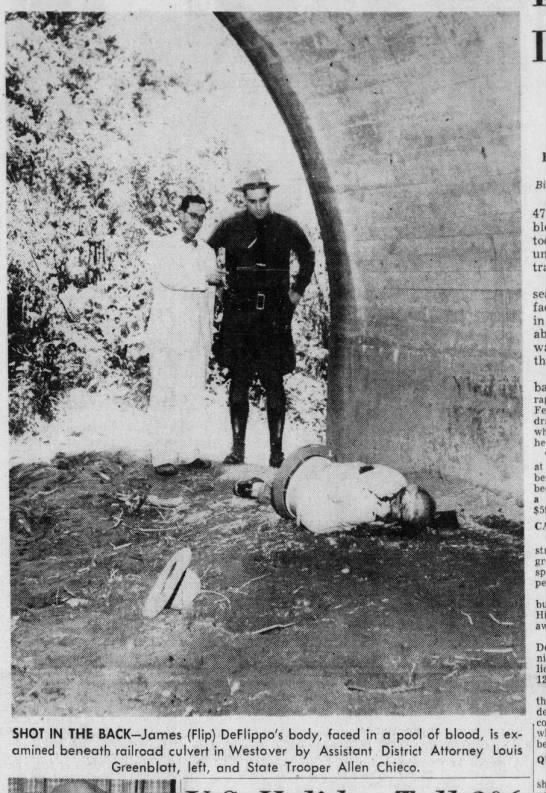
On July 06, 1952 “Flip” was found shot to death beneath a culvert under the Erie Railroad tracks in Westover. He was shot once in the back and once in the temple His body was found by two boys searching for scrap metal. It’s believed that the murder were a mafia ordered “execution.” James was laid to rest at the Calvary Cemetery located in Johnson City, Broome County, New York.
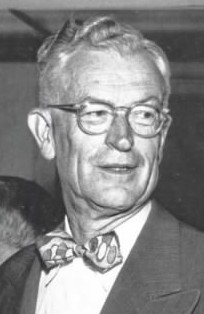
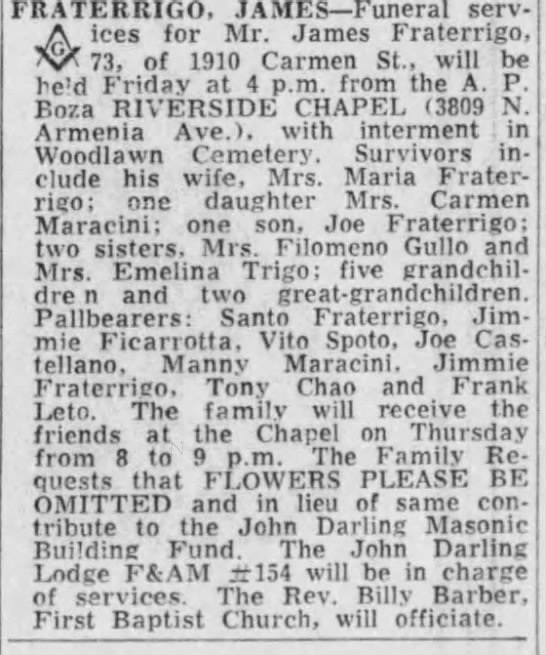
Vincenzo James “Jimmy” Fraterrigo (1894-1967) was believed to be a member of the Trafficante Crime Family who was involved in the bolita rackets in Tampa. Jimmy was born on March 04, 1894 in Casteltermini, Agrigento, Italy to parents Francesco Fraterrigo (1878–1939) and Ninfa Rittino (1881–1967). According to a Florida naturalization record it stated that on 30 Aug 1906 Jimmy arrived to New York, New York. He later relocated to Tampa Fla where he was a residence for over 67 years.
According to FBI files it stated that Jimmy was involved in the bolita rackets in Tampa. It also stated that Jimmy was close to Tampa mayor Nicholas “Nick” Nuccio and was known to supported Nucci during his campaigns. Is was once said that when Nuccio one time arrested Jimmy on bolita charges, City Hall was in a turmoil and the next day Nuccio and the next day Nuccio say that Jimmy had supported him and inferred there were plenty other persons who had not supported him.
Jimmy was present with Ignacio Antinori on October 22, 1940, at the Palm Garden Inn, when a gunman appeared and blew the back of Antinori’s head clean away.
Jimmy was known to be a Freemason of the John Darling Lodge No. 154 F&AM for over 30 years and he was a owner of the F and G Macaroni Factory in West Tampa. Jimmy died on 6 Aug 1967 at the aged of 73 and is laid to rest at the Marti-Colon Cemetery which is located in Tampa, Hillsborough County, Florida.
http://tony33694.com/JDL154/Nick Chillura Nuccio was probably the most colorful and animated politician in the history of Tampa and Hillsborough County.
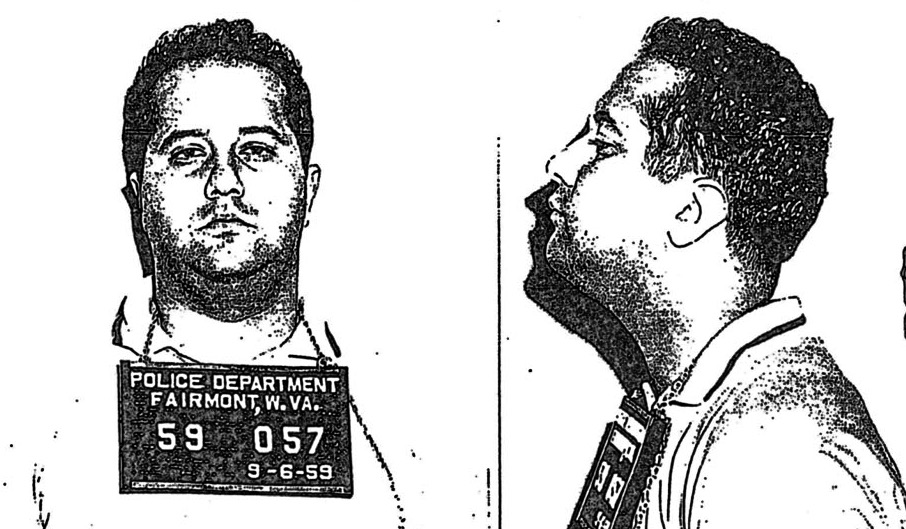
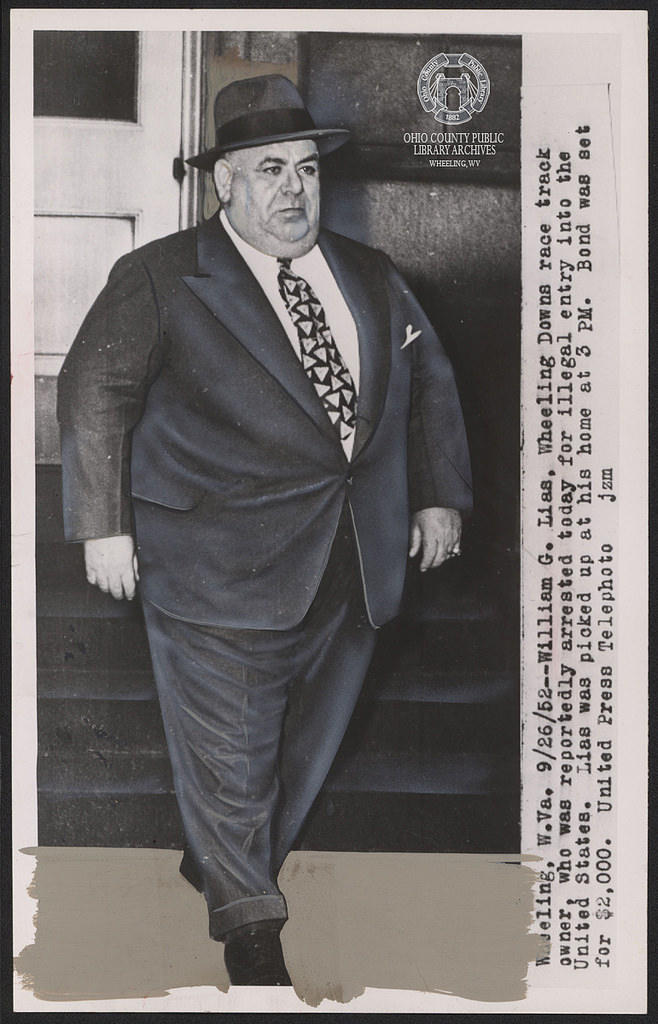
Paul “No Legs” Hankish (1931-1998) was a West Virginia mobster who had close ties to the Pittsburgh crime family. Hankish was born on July 8, 1931, in Wheeling, Ohio, West Virginia. Hankish was involved in crime since the 1950’s. In 1964, William “Big Bill” Lias who was the boss of the West Virginian faction of the Pittsburgh Crime Family, managed to have a car bomb detonated which blew off Hankish legs and brought about the grizzly nickname “No Legs.” Undeterred, Hankish moved in on Lias’ territory and staked his claim on behalf of the Pittsburgh syndicate. In 1974 Hankish was slapped with a 10-year prison sentence for allegedly hijacking a beer truck. By the early 1980’s Hankish was back out on the streets. Hankish was known to make his money from gambling and vending machines but it was narcotics trafficking that brought in cash, a portion of the money was kicked up to the Pittsburgh crime family. In 1988 Hankish was indicted on multiple racketeering counts. The acts included illegal gambling, extortion, murder conspiracy and narcotics trafficking. Hankish was sentenced to 33 years in prison and died on May 1998.





 The Criminal Underworld Compilation